The Hidden Rule Stopping Grocers From Advertising Lower Prices Is Now Under Investigation
Canada’s Competition Bureau is probing minimum advertised pricing rules in grocery, and Loblaw is cheering. Here’s what the MAP investigation means for prices.
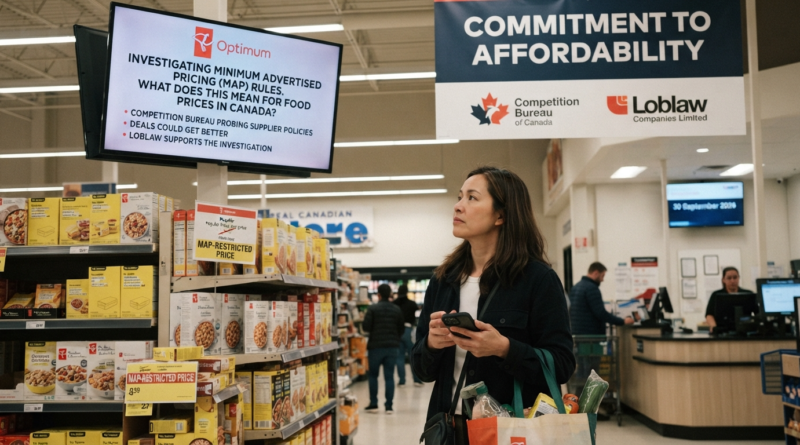
Most shoppers have never heard of minimum advertised pricing. Yet these supplier rules may shape which deals appear in grocery flyers, apps and shelf signs. In late September 2026, Canada’s competition watchdog opened an investigation into how they are used across the grocery sector, and the country’s largest retailer quickly welcomed it.
What the Competition Bureau is investigating
The Competition Bureau of Canada has launched a probe into minimum advertised pricing (MAP) policies in grocery. Its core question is whether these policies make it harder for Canadians to find deals.
The Bureau is examining four specific concerns:
- Whether MAP rules make it more difficult for shoppers to find lower prices
- Whether they reduce price competition between grocers
- Whether they create barriers for discount and new-entrant grocers
- Whether they make it easier for grocers to coordinate prices
Interim Competition Commissioner Jeanne Pratt said Canadians expect stores to be able to promote their best deals. The Bureau is also gathering information that will feed into a broader examination of competition across Canada’s food supply chain.
What is a minimum advertised pricing policy?
A MAP policy is a rule set by a supplier or brand owner. It puts a floor under the price a retailer may advertise for a product. Retailers can often still sell the item for less at the till, but they cannot promote that lower price publicly.
Suppliers typically defend MAP for several reasons. It can protect a brand’s premium image, encourage retailers to invest in service and stop some retailers from free-riding on promotions others pay for. Critics argue the same rules can quietly blunt price competition, especially for value-focused retailers that rely on advertising low prices.
Why Loblaw is backing the probe
On 30 September 2026, Loblaw Companies Limited issued a statement applauding the investigation. The retailer said MAP policies are used by some of the world’s largest consumer packaged goods (CPG) companies. It argued that they can stop retailers from advertising lower grocery prices, which ultimately affects what Canadians pay.
Loblaw also voiced support for the Bureau’s wider review of competition across the entire food supply chain. It said the review is needed to understand all the major factors behind food costs. The company pointed to its own affordability levers, including promotions, PC Optimum loyalty offers, control brands and investment in discount banners.
The move also shifts the spotlight. Canadian grocers have faced years of public criticism over food prices. By backing a probe that targets supplier practices, Loblaw is framing global CPG manufacturers as part of the affordability problem.
What it means for retailers and suppliers
The outcome is not yet known, and the Bureau has not set out a timeline. But the investigation has clear implications for the grocery trade:
- CPG suppliers with MAP policies in Canada may need to review how those rules are written and enforced.
- Discount and challenger grocers could gain more freedom to advertise aggressive prices if restrictions are loosened.
- Trade terms and joint business plans between retailers and brands may face closer scrutiny.
- Other markets may take note. Grocery affordability is a political issue in many countries, and regulators elsewhere could look at similar practices.
The bottom line
The MAP investigation puts a rarely discussed supplier practice under the microscope. If the Bureau finds that these rules dampen competition, the result could change how grocery promotions are planned and advertised in Canada. For now, retailers and brands should prepare for questions about who really controls the prices shoppers see.
FAQ
What is minimum advertised pricing (MAP)? MAP is a supplier policy that sets the lowest price a retailer can advertise for a product. Retailers may still be able to sell below that price but cannot promote it.
Why is Canada’s Competition Bureau investigating MAP in grocery? The Bureau wants to know whether MAP policies make deals harder to find, reduce price competition, block discount and new grocers, or make price coordination easier.
Who is leading the investigation? The Competition Bureau of Canada announced the probe, with interim Competition Commissioner Jeanne Pratt commenting on it.
What is Loblaw’s position? Loblaw applauded the investigation in a 30 September 2026 statement and said MAP policies used by large global CPG companies can restrict retailers from advertising lower prices.
Will this lower grocery prices in Canada? It is too early to say. Any effect depends on what the Bureau finds and what action, if any, follows.